
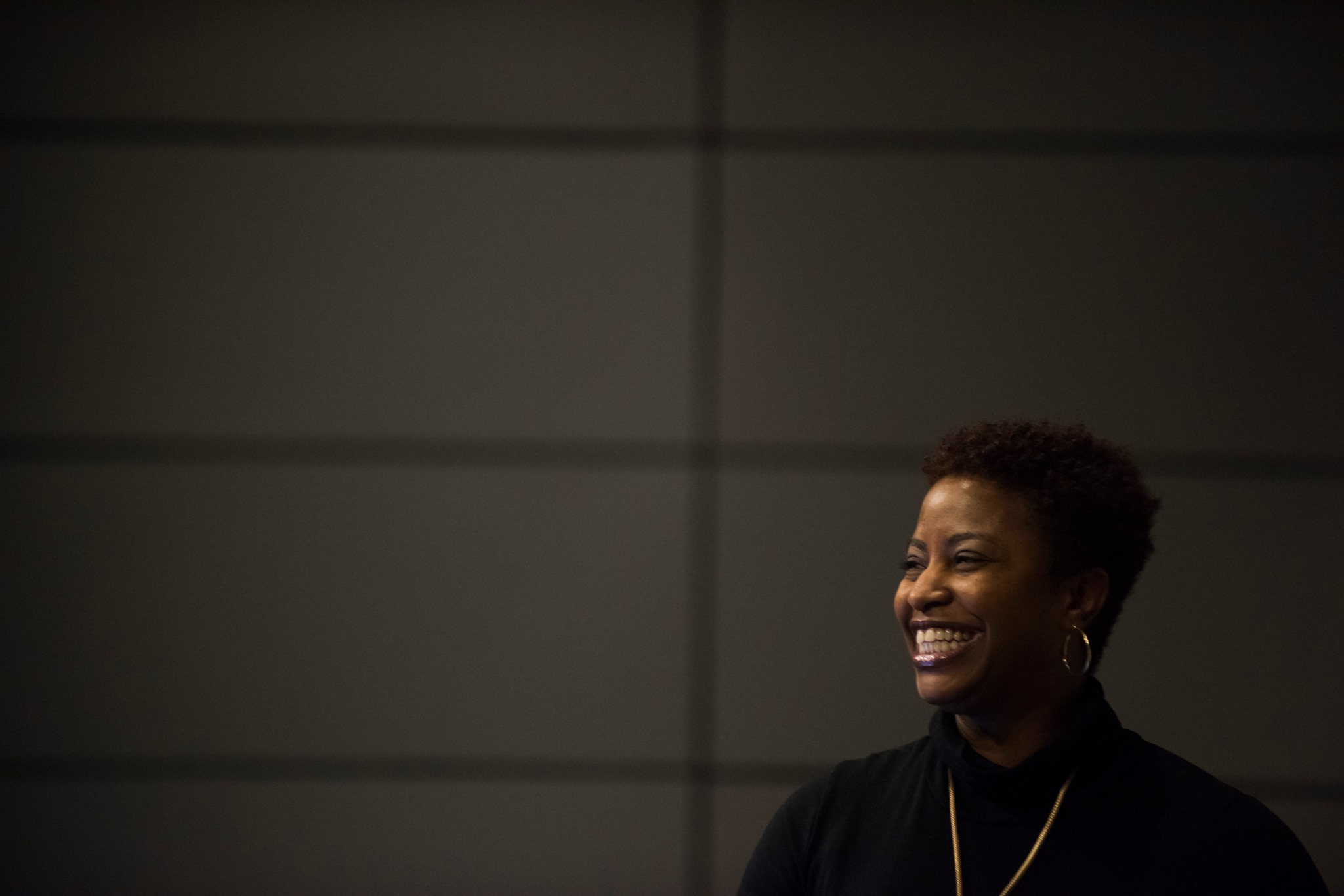
She walked into the classroom in what almost seemed like a glide. I wondered were her feet even touching the floor. As she made her way to the front of the room I quickly remembered what other students said about Ruth Seymour. Some loathed her journalism course and others simply referred to her as a bitch.
It was 1997 and I was a student at Wayne State University in Detroit, Mich. majoring in public relations. To get my degree, I was forced to take a news writing course.
One of our first assignments was to write about Ruth.
So, I began, “There’s the one they call a bitch.” Next class Ruth pulled me to the side and told me I should think about majoring in journalism and I seemed to have a natural talent. She also asked me if students really thought that of her. They did.

That’s how my career began in journalism. As an undergrad, I interned at a few niche publications, the Seattle Times, The Detroit News, and the Detroit Free Press. I would later work at the News professionally, the Flint Journal and at news television stations Fox46 in North Carolina and NBC25 in Michigan for a stint (a very short couple of weeks. I also helped launch a couple of niche publications. In total, I walked away with nearly 20 years of news experience under my belt before launching my own company Brown Impact Media Group aimed at developing news products in and for underserved and marginalized communities. I started with my hometown and launched FlintBeat.com, a hyperlocal news website focused solely on Flint.
Since I launched Black Like Us, there have been questions about who I am. This is a very short summary answering that question and how we got here.
I’m just a girl from Flint, Mich.
I grew up in the Flint, Mich. area. I suppose in an average household but I don’t have numbers to prove it. I was raised by my mother and grandmother who both worked the assembly line for General Motors. Mom (Mama) is now retired and my grandmother (Nana) died in 2001. Nana owned a home in Flint and Mama owned a home in the outlining suburbs in Genesee Township also known as Beecher. I would bounce between both communities making friends in the city and the township. Even to this day, I question my authenticity. Am I really claim to be from Flint or Beecher?
There are some stereotypical things about my life that I don’t shy away from but I would like to think that most of my childhood was beautiful, I was surrounded by love and good people.
How we got here
I launched Flint Beat in 2017 wanting to change the media landscape in Flint and better cover the community I grew up in. I was team solo but desired to do other projects including writing about the things that Black folks do that are not often found in mainstream media. In 2018, I started following roller skaters, talking to Black dollmakers and motorcyclists. The project didn’t quite take off as I tried to manage my commitments to Flint Beat. I just couldn’t do it all. I wasn’t receiving a salary, was managing the news site, and working a full-time job to take care of my family. I put Black Like Us on my retirement list and said I would revisit it when I was about 60 years old.
In four years, the Flint Beat team grew from one to two, then three and then five (We hired two employees at the same time). We are now a strong team of six employees and three contractors that have been loyal over the years.
I had more time than I had since the 2017 launch and was working full-time as publisher mostly focused on operations.
Things just fell into place and I could take my passion project off of my retirement list sooner than planned. The time for Black Like Us was now with an opportunity to be part of Facebook Bulletin, a newsletter platform. Growing up, I was told when doors open to run through them. So, I did and now we are here.

Since the launch, I have faced a couple of challenges. I had COVID-19 which put me down for about three weeks and now I’m working to secure a motorhome to travel across the country in. I always have big ideas and a little budget.
I’ve interviewed a yoga instructor, bicyclist, commercial fisherman, rocket scientist, a historian who is also a comic book illustrator and storyteller, and a young man who launched his own news website covering HBCU sports. That’s just the beginning. There are some upcoming stories that I am very excited about that include camping, scuba diving, surfing, and farming.

I am unapologetically Black. This is true. I love Black people and know the beauty that is in us. But this project is intended for anyone and everyone who wants to read inspiring stories about people who happen to be Black and are doing really cool things.
Thank you for reading and thank you for allowing me to share,
Jiquanda