
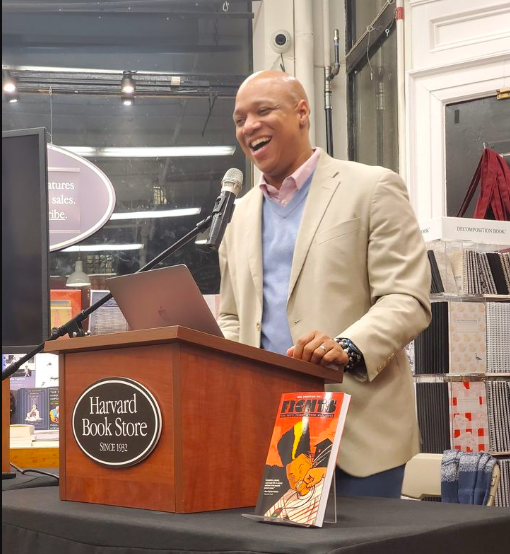
As a young boy growing up poor in a small Southwestern Virginia town project community, drawing was a way for Joel Christian Gill to disappear, even if it was only for a moment.
Art supplies were sparse, and he had little to no support to nurture his talent. He would find sheets of paper, grab a pen or pencil and draw fantasy worlds over and over again with whatever he had.
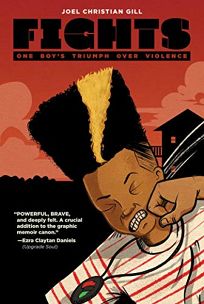
“[In my book Fights], I wrote about the trauma and abuse I went through as a kid. For a lot of ways, it was cathartic for me to draw,” Gill said. “Like I can draw my own places and my own worlds. So what I often did, I drew lots of fantasy worlds that I drew all the time over and over and over again.”
When he was 11 years old, a manager at the project community where he lived would validate that he was good at drawing with a contest where kids would use their skills to draw on pumpkins.
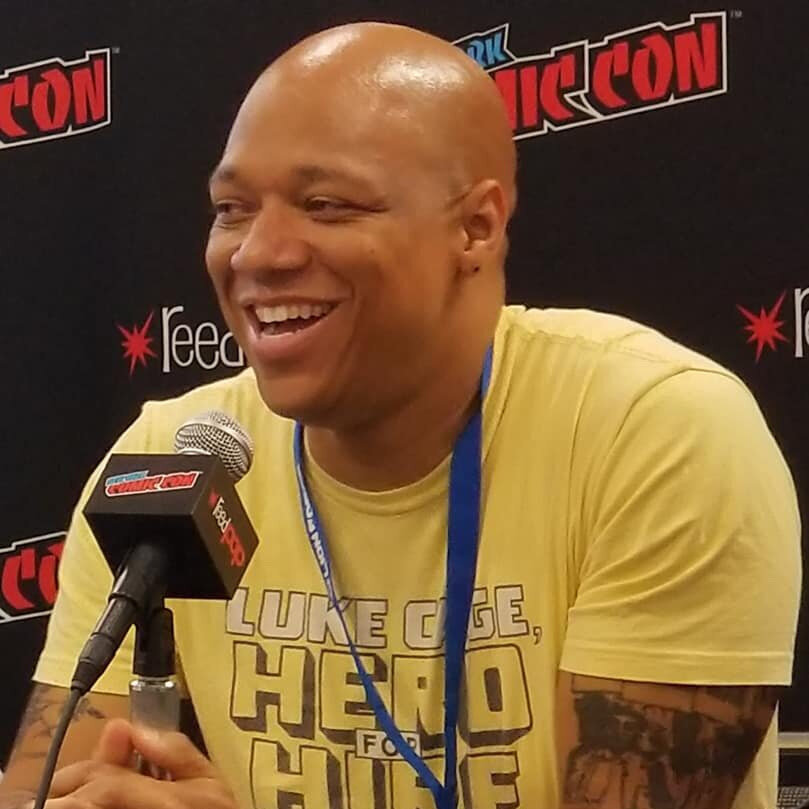
“She was really about activities for everybody,” Gill said. “I won that contest. I drew a beard, mustache, and sunglasses while the other kids were just drawing regular triangles and rectangles and I was drawing a face. That was probably the catalyst for me. When I think about it, my drawing was bad compared to what I can do now.”
Gill, a cartoonist, historian, professor, and book author, would navigate the world as a poor Black kid growing up in the projects. He would grow up during the 80’s crack-cocaine boom that invaded poverty-stricken communities, and he would do most of this with little to no support from adults in his life.
“There was nobody. I didn’t have a support network,” said Gill. “It was probably when I got married my biggest support came. My wife was my biggest support. She was and still is one of my biggest champions.”
Though other things would capture his attention as he navigated adolescence and early adulthood, Gill would somehow find his way back to art. Along that journey, he would struggle with what direction he wanted to go with his career, become a husband and a father of twin girls and a son, earn his MFA, land a job as an art professor, and author several books based on Black history.
“All of my books are based on history,” Gill said. “I had a book signing and there was this man who came up to me and you typically get people who say, ‘Oh you draw well, this is an interesting color’ or ‘I like that technique’ and this man came up with tears in his eyes and he said, ‘Thank you. I just want to thank you for telling these stories.’ This is resonating with people in a way and I don’t even realize it. It made me start thinking. I have a responsibility, people pay attention to me….I’m going to do something that makes a difference.”
He’s known for his works Strange Fruit, Tales of the Talented Tenth, and Fights which is an autobiography giving readers a glimpse into his life.
“I really didn’t have much of a network which is one of the reasons I wrote Fights because I wanted to connect to those kids who grew up like I did, and I wanted to tell them there’s some hope out there on the other side of all of the stuff that they go through.”